A compressed sofa can look straightforward on paper: dimensions, foam density, fabric, unit price, and maybe a promised container quantity. But many buyers discover too late that price and specs alone do not protect margin, delivery reliability, or customer satisfaction. In real sourcing decisions, the bigger question is not just what the sofa is. It is how the sofa is packed, compressed, loaded, shipped, recovered, handled after arrival, and experienced by the end customer.
That is where outcomes often diverge.
Two suppliers may quote a similar-looking compressed sofa in a box, yet one delivers a cleaner loading plan, lower damage risk, more stable shape recovery, easier warehousing, and fewer post-delivery complaints. The other delivers hidden cost: wasted cube, repacking delays, claims, inconsistent expansion, and avoidable operational friction.
For importers, distributors, project buyers, and private-label teams, this is the real buying risk.
Why buyers still get poor results after comparing price and specs
Many furniture buyers are not careless. They compare quotations carefully. They request material details. They ask for seat dimensions and carton sizes. They negotiate hard.
Yet poor outcomes still happen because the comparison framework is too narrow.
If the only decision filters are ex-factory price, visible design, and headline specifications, critical variables remain untested:
- Whether compression is stable enough for transit duration
- Whether packaging protects seams, edges, and fabric during stacking
- Whether carton dimensions truly optimize container loading
- Whether loading plans account for palletization, handling, and destination warehouse realities
- Whether the sofa regains its intended form consistently after unpacking
- Whether the product presentation still feels premium after being tightly packed
In other words, the risk is not just buying the wrong sofa. It is buying the wrong system.
A sofa compressed for shipping succeeds only when engineering, packaging, logistics, and product recovery work together.
The hidden cost of treating compressed packaging as a secondary detail
A lower quoted cost can be attractive, especially when freight pressure and margin targets are tight. But compressed furniture economics are rarely decided by unit cost alone.
The hidden costs tend to appear later:
- Higher freight cost per sellable seat due to inefficient cube use
- More labor at origin or destination because cartons are hard to handle
- Increased damage claims from burst packaging or poor edge protection
- Slower warehouse throughput from inconsistent carton sizing
- Retail complaints if the sofa does not recover evenly
- Brand erosion if the unboxing experience feels cheap or unreliable
This is especially important for businesses selling a sofa in a box compressed format through e-commerce, wholesale, or retail chains. A product that looks efficient in the container but creates downstream friction is not actually efficient.
The strongest sourcing decisions reduce total operational drag, not just purchase price.
Packaging is not an accessory. It is part of the product.
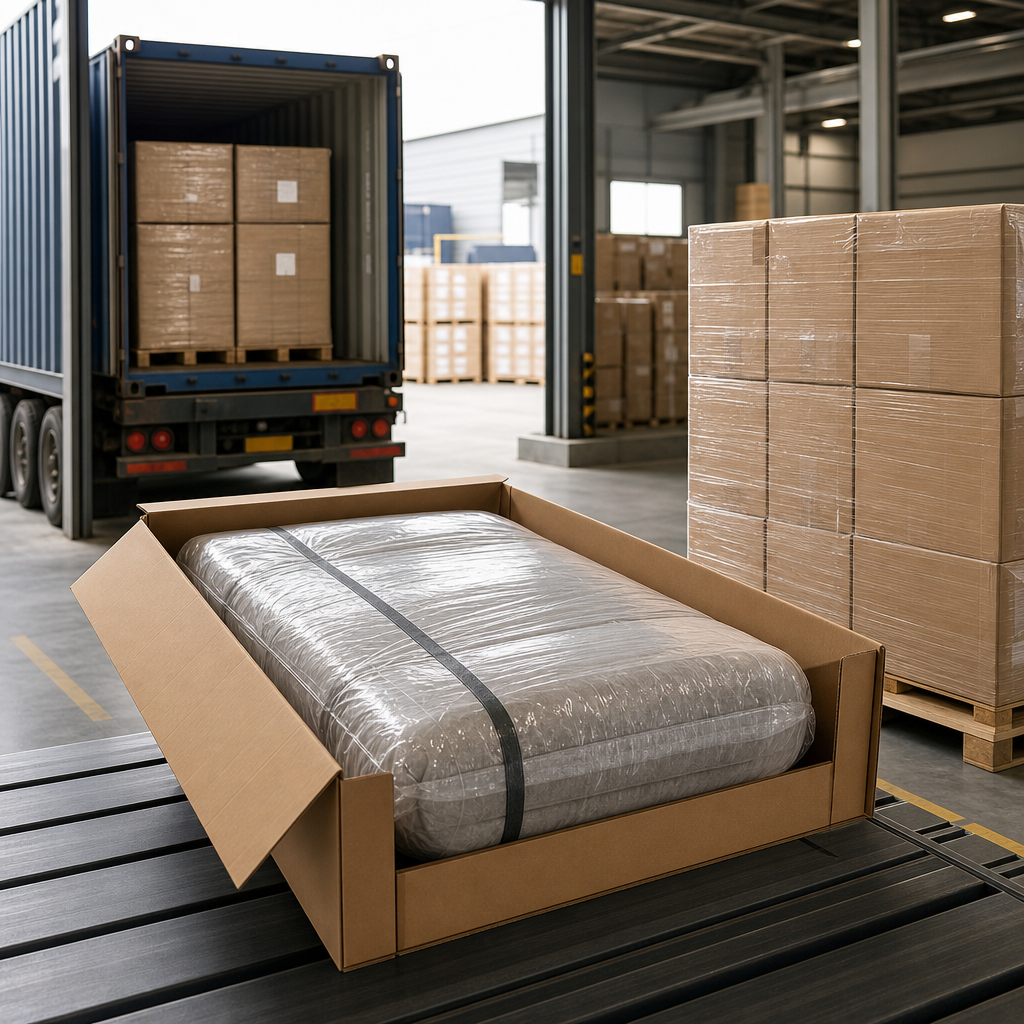
For compressed upholstered furniture, packaging does more than contain the item. It affects loading density, transit protection, unpacking workflow, and first-use satisfaction.
When evaluating a compressed foam sofa, buyers should assess packaging as a technical and commercial component, not a cosmetic afterthought.
Key questions include:
- What compression method is used, and how long can the product remain compressed without performance risk?
- What inner protection prevents abrasion, moisture exposure, or seam stress?
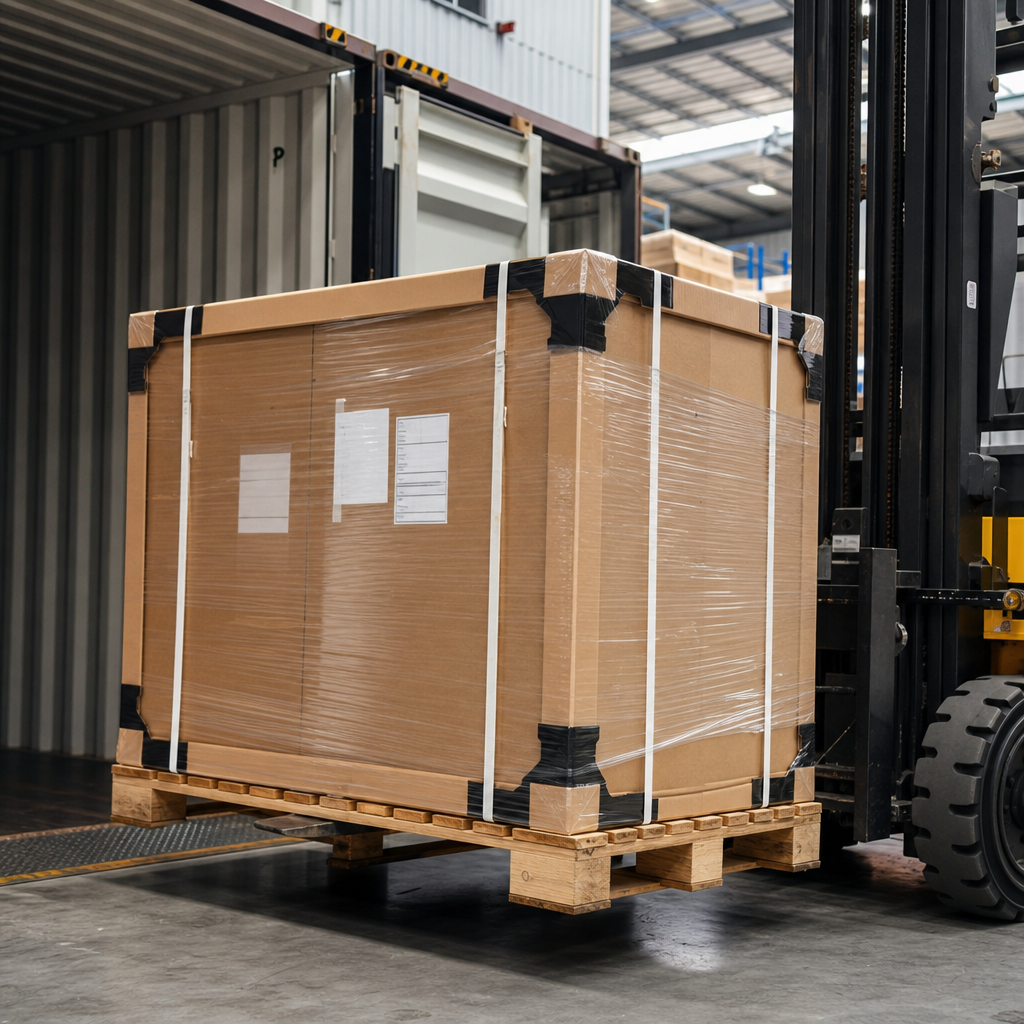
- Does the outer carton hold shape under stacking and long-haul handling?
- Are the package dimensions designed around real container efficiency, not theoretical volume?
- Is the package manageable for warehouse teams and final-mile handling?
- Does the labeling support inventory control and smoother receiving?
A well-designed package can improve fill rate, reduce breakage, simplify handling, and protect the perceived value of the furniture. A weak package can undermine all four.
[Image suggestion: Comparison graphic of two compressed sofa packaging systems with notes on carton durability, edge protection, and loading efficiency. Alt text: “Compressed sofa packaging comparison showing carton protection and container loading efficiency”]
Container loading is where margin can quietly improve or disappear
For many B2B buyers, container loading is the commercial hinge point.
A few centimeters in carton design can influence:
- units per container
- freight cost per unit
- warehouse slotting efficiency
- unloading speed
- damage exposure from unstable stacking
This is why experienced buyers ask for more than carton dimensions. They ask for the logic behind the loading plan.
A credible compressed furniture supplier should be able to explain:
- How many units fit in a 20GP, 40GP, and 40HQ container
- Whether the count assumes ideal loading only or practical loading conditions
- How cartons are arranged to avoid collapse or movement in transit
- Whether mixed-model loading is possible without creating instability
- What trade-offs exist between maximum cube utilization and product protection
A supplier that only gives a number, without explaining the loading method, may be giving you a sales answer rather than an operations answer.
What good container loading should achieve
Good container loading is not simply “fit more units.” It should balance four outcomes:
- Higher shipping efficiency without over-compressing the sofa
- Stable transit performance across long lead times
- Faster receiving and storage at destination
- Predictable product recovery after unpacking
This balance matters whether you are sourcing a modular sectional, a compressed sofa bed, or a lounge-oriented upholstery line intended for retail programs.
Why recovery performance matters as much as compression ratio
A compressed product must survive two moments: transit and reopening.
Some buyers focus heavily on how small the product becomes. That is understandable. Better compression can mean more units per container. But if the product does not recover smoothly, the commercial benefit disappears fast.
The better question is not “How tight can it be packed?” It is “How reliably does it return to intended shape and comfort after shipping and storage?”
For a compressed sofa, recovery performance affects:
- visual presentation on the showroom floor
- assembly time and customer effort
- perceived quality
- return rates
- reseller confidence
- repeat order potential
This is especially relevant with modular upholstery. Buyers looking at products like a compressed modular fabric sectional sofa or a compressed modular velvet sectional sofa are not just buying a seat count. They are buying a customer experience that starts at unboxing and ends at everyday use.
The questions professional buyers should ask before placing an order
If you want to reduce sourcing risk, ask questions that go beyond the line-item quote.
Packaging and compression
- What is the recommended maximum compression period?
- What tests or shipment history support that recommendation?
- What protective layers are used inside the carton?
- How is moisture risk managed during ocean freight?
Loading and logistics
- What is the practical container loading plan by model?
- Can the supplier provide loading diagrams or photos?
- How does the packaging perform under stacking pressure?
- Are there loading limits for mixed SKUs?
Product recovery and quality consistency
- How long does the sofa typically need to recover after unpacking?
- Are there appearance variations immediately after opening?
- What are the most common post-unpacking issues, if any?
- How are foam, fabric, and seam performance controlled across batches?
Commercial execution
- What is the lead time under normal and peak season conditions?
- How are packaging changes handled if cube optimization is needed?
- What happens if carton failure or recovery issues occur at destination?
- What support exists for repeat programs and product updates?
These questions do more than filter suppliers. They reveal whether a factory understands the operational reality of compressed furniture.
A better sourcing mindset: buy confidence, not just a cheaper unit
The strongest furniture sourcing teams do not aim to buy the cheapest acceptable sofa. They aim to buy a repeatable business result.
That result may include:
- more units per container without excess risk
- fewer logistics surprises
- lower damage rates
- smoother retail launch
- stronger customer reviews
- better confidence in replenishment planning
This is where a supplier relationship becomes strategic rather than transactional.
For example, a design-forward model like a compressed modular oval fabric seat sofa may appeal visually, but the real value is in whether the packaging and loading system support efficient import, consistent recovery, and low-friction delivery.
That is the difference between buying a sample that photographs well and buying a product line that performs well at scale.
[Image suggestion: Warehouse team unloading boxed compressed sofas from a shipping container. Alt text: “Warehouse unloading compressed sofa in a box cartons from container with organized stacking plan”]
Safety, compliance, and product stewardship still matter
Even when the commercial discussion centers on freight and packaging, buyers should not ignore product safety and regulatory awareness. Depending on market and sales channel, furniture programs may involve labeling, material, flammability, or consumer safety considerations.
A useful reference point is the U.S. Consumer Product Safety Commission. Buyers serving the U.S. market can review relevant guidance and updates at the CPSC website.
This is not just a compliance exercise. It is part of risk control. A compressed product that ships efficiently but creates regulatory or safety exposure is not a sound sourcing decision.
How MagiSofa approaches the compressed sofa category
At MagiSofa, we understand that professional buyers are under pressure from multiple directions at once: target pricing, container utilization, lead times, quality consistency, and end-customer expectations.
That is why the conversation around compressed sofa sourcing should start with operational fit, not just appearance and quotations.
A reliable compressed furniture program should help buyers answer:
- Will this packaging strategy support our freight model?
- Will recovery quality protect our brand presentation?
- Will loading efficiency hold up under real shipping conditions?
- Will the supplier still be dependable when the order volume scales?
These are practical questions, but they carry strategic weight. They affect reputation, forecasting confidence, and total cost over time.
[Image suggestion: Close-up of a compressed sofa expanding after unpacking in a staged showroom setting. Alt text: “Compressed foam sofa recovering shape after unboxing in showroom”]
FAQ: Compressed sofa packaging and container loading
What is the main risk of buying a compressed sofa based only on price?
The main risk is hidden total cost. A lower-priced compressed sofa may lead to weaker packaging, poorer loading efficiency, higher damage rates, slower handling, or inconsistent recovery after unpacking. Those issues can reduce margin more than the initial savings help.
How does packaging affect container loading for a compressed sofa in a box?
Packaging affects carton dimensions, stacking stability, handling ease, and usable container space. A well-designed compressed sofa in a box system improves cube utilization while protecting the product during transit. Poor packaging can waste space or increase the risk of carton failure.
Is a higher compression ratio always better?
No. A higher compression ratio may increase units per container, but it can also raise the risk of shape recovery issues, material stress, or customer dissatisfaction if not engineered carefully. The right goal is reliable recovery and safe transit, not maximum compression at any cost.
What should buyers ask about sofa recovery after shipping?
Buyers should ask how long the sofa needs to recover after unpacking, whether wrinkles or shape variation are expected initially, and what shipment history supports the recovery claim. For any sofa compressed for logistics efficiency, recovery performance is a core quality factor.
Are compressed sofa beds and modular sofas evaluated the same way?
They share similar packaging and loading concerns, but construction differences matter. A compressed sofa bed may involve additional mechanism or structural considerations, while modular sofas may present more options for carton configuration and mixed container loading. Both should be evaluated as complete logistics systems, not just furniture items.
Conclusion
When buyers focus only on price and visible specs, they often keep comparing suppliers without reducing the real risk. In the compressed furniture category, packaging design, recovery performance, and container loading discipline are not side issues. They are part of the product’s business value.
If your team is evaluating a compressed sofa program, the more useful question is not simply “Who quoted less?” It is “Who can help us ship smarter, protect margin, and deliver a more reliable result?”
To explore compressed sofa options built around both product appeal and operational logic, visit MagiSofa’s compressed sofa collection pages or contact our team to discuss your loading, packaging, and sourcing goals.