When sourcing a compressed sofa, importers need more than a competitive FOB price. Packaging quality, compression method, carton durability, and container loading efficiency directly affect freight cost, warehouse handling, product damage rates, and customer satisfaction. A well-made compressed sofa can reduce cube, improve loading density, and support modern retail formats such as e-commerce and club-store distribution. A poorly prepared one can create claims, delays, and costly repacking.
This checklist is designed for furniture importers evaluating a compressed sofa manufacturer, with special attention to packaging systems and container loading performance. It also applies to buyers sourcing a compressed sofa in a box, a compressed sofa bed, or other sofa compressed formats for retail or project channels.
Why packaging and loading matter for compressed sofa imports
For importers, the commercial value of a compressed sofa goes beyond appearance and comfort. The real advantage is logistics efficiency.
A reliable compression and packing program can help you:
- Lower shipping cost per unit
- Increase units per container
- Improve warehouse stackability
- Reduce damage during ocean transit
- Simplify final-mile delivery
- Support direct-to-consumer and marketplace fulfillment
In practical terms, a sofa in a box compressed for export should be engineered not only for visual appeal, but also for carton strength, rebound performance, moisture protection, and safe unloading at destination.
The importer’s compressed sofa manufacturer checklist
Below is a practical checklist you can use during supplier screening, product development, and pre-shipment approval.
1. Verify the compression method and recovery performance
Not every compressed sofa is compressed the same way. Importers should ask how the manufacturer handles vacuum compression, roll-packing, fold-packing, or combined carton compression.
Key questions to ask:
- What materials are being compressed: foam, fiber, pocket springs, or hybrid construction?
- How long can the product remain compressed without permanent deformation?
- What is the recommended recovery time after unpacking?
- Has the supplier tested rebound consistency across production batches?
- Are there different compression standards for a compressed foam sofa versus a framed model?
A dependable supplier should provide recovery guidance in writing. This is especially important for a compressed sofa bed, where the folding mechanism, foam density, and surface fabric all affect post-unboxing shape and comfort.
What to look for in recovery testing
Ask for test data or in-house QC records covering:
- Expansion height after unpacking
- Time to full recovery
- Wrinkle reduction after 24–72 hours
- Compression set resistance
- Fabric seam integrity after decompression
If the supplier cannot explain the recovery profile clearly, that is a warning sign.
2. Check carton design, dimensions, and edge protection
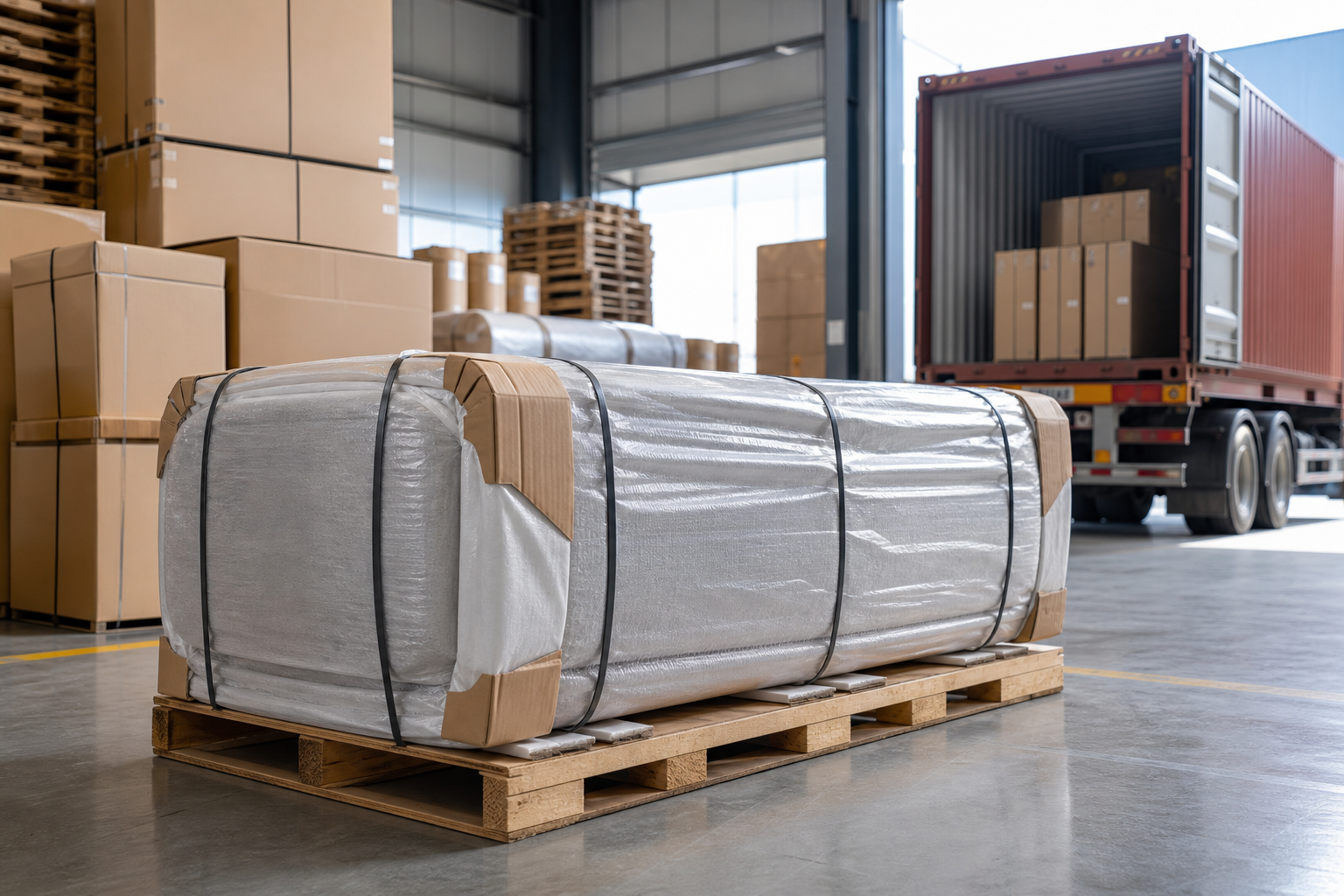
Carton design is one of the most overlooked issues in compressed furniture sourcing. A strong product can still fail in transit if the outer packaging is under-specified.
Your review should include:
- Carton board grade
- Burst strength or edge crush rating
- Reinforced corners
- Inner polybag quality
- Moisture barrier protection
- Strap placement
- Label visibility
- Handling marks
For a compressed sofa in a box, the carton should be sized tightly enough to reduce movement, but not so tight that it damages fabric, piping, or foam edges.
Ask the manufacturer for:
- Packed dimensions per SKU
- Gross and net weight
- Drop-test standards
- Stacking recommendations
- Pallet compatibility if required
[Image suggestion: Cross-section diagram of compressed sofa export packaging with carton layers, inner bag, straps, and edge protection. Alt text: “Compressed sofa packaging structure for export with carton and moisture barrier”]
3. Confirm moisture protection for ocean shipping
Ocean freight exposes upholstered furniture to humidity swings, condensation risk, and long transit periods. This is critical for any sofa compressed and sealed for weeks in a carton.
Your supplier should have a moisture-control strategy that may include:
- PE inner bags with adequate thickness
- Desiccant use where appropriate
- Container dry bags or moisture absorbers
- Clean, dry packing areas
- Rules for fabric and foam storage before packing
This matters even more for upholstered SKUs shipped to humid climates or during monsoon and winter transitions.
As a benchmark for safe consumer products and product stewardship, importers may also review guidance and compliance expectations from agencies such as the U.S. Consumer Product Safety Commission.
4. Review the actual packing workflow on the factory floor
A good specification sheet is not enough. Importers should understand how the packing process works in real production.
Ask the manufacturer to document or show:
- Pre-pack inspection steps
- Compression equipment used
- Seal integrity checks
- Carton forming and taping process
- Metal detection or sharp-point prevention if relevant
- Final carton weighing and label verification
A strong factory process will include checkpoints to ensure the compressed sofa leaves the line in the same condition every time.
If possible, request packing-line photos or a short packing video for approval. This is particularly useful when sourcing a high-volume sofa in a box compressed program for chain retail.
5. Evaluate container loading plans before booking production
Container loading should never be left to guesswork. Importers should ask for a loading plan as early as quotation stage.
Important points to verify:
- Units per 20GP, 40GP, and 40HQ
- Loading orientation
- Floor loading versus pallet loading
- Weight distribution
- Void space management
- Mixed-SKU loading options
- Carton crush risk in upper layers
A professional compressed sofa manufacturer should be able to explain how many units fit safely, not just theoretically.
H3: Ask for a container loading simulation
A loading simulation helps importers compare suppliers on real freight efficiency.
Request:
- Container loading diagram
- SKU-by-SKU carton dimensions
- Maximum stack height
- Actual loaded photos from past shipments
- Estimated utilization rate by cubic meter
This step is valuable when comparing a lounge format, a three-seater, and a compressed sofa bed across the same container program.
For example, a compact daybed format like this compressed sofa lounge daybed may support a different loading pattern than a wider living-room seating model.
[Image suggestion: Container loading plan showing rows of boxed compressed sofas in a 40HQ container. Alt text: “40HQ container loading layout for compressed sofa cartons”]
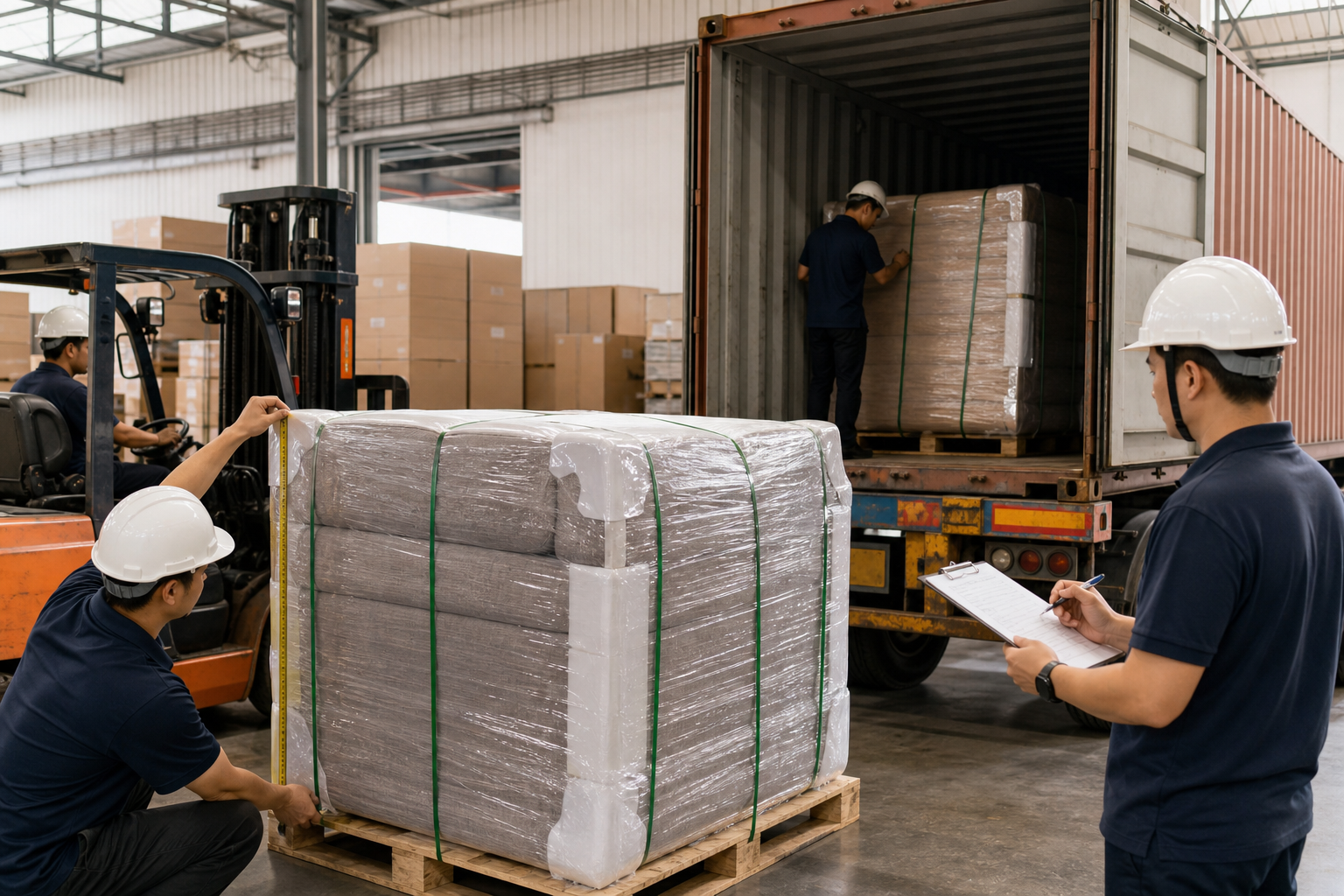
6. Check product dimensions before and after compression
Importers should confirm three sets of dimensions:
- Assembled product dimensions
- Packed carton dimensions
- Container-loaded dimensions and count
This sounds simple, but mismatches in measurement method are common.
Ask the supplier:
- Are dimensions taken manually or from CAD?
- Is tolerance defined for both product and carton?
- Are sample measurements aligned with mass-production measurements?
- Are carton bulges measured after compression and sealing?
This is especially important for a compressed foam sofa, because foam rebound and fabric tension can change the final shape after opening.
7. Audit labeling and carton marking requirements
For importers selling through multiple channels, packaging labels are not a minor detail. They affect receiving, inventory, compliance, and customer service.
Your checklist should include:
- SKU label placement
- Barcode format
- Country of origin marking
- PO and carton number
- Quantity per carton
- Gross and net weight
- Handling icons
- Unboxing instructions
- Warning labels if required
For e-commerce programs, include customer-facing carton graphics only if they support your brand and reduce returns. Otherwise, neutral export cartons may be the better choice.
8. Review damage-prevention measures for last-mile handling
The journey does not end at the port. A compressed sofa may move through:
- Port warehouse
- DC receiving
- Cross-dock transfer
- Parcel handling
- Retail backroom
- Final-mile delivery
That means the package must withstand multiple touchpoints.
Look for:
- Corner protection
- Abrasion-resistant outer surfaces
- Clear “do not use blade deeply” opening instructions
- Internal restraint to reduce shifting
- Safe unboxing design to prevent accidental fabric cuts
A foldable product such as this compressed sofa bed floor sofa may need especially careful unboxing instructions because customers often open it directly in the home.
9. Confirm material consistency and QC standards
Compression performance depends heavily on material consistency. If foam density, fabric elasticity, or adhesive quality varies, packing results can vary too.
Ask about QC for:
- Foam density and ILD
- Fabric GSM and abrasion performance
- Stitch strength
- Zipper quality if applicable
- Color consistency across lots
- Odor control after unpacking
For living-room retail programs, a structured three-seat model like this three-seat compressed sofa should be evaluated not just for appearance, but also for cushion recovery and long-term seat stability after shipping.
10. Ask for pre-shipment approval samples packed exactly like production
One of the most effective risk controls is a packed approval sample.
Do not approve only an uncompressed showroom sample. Instead, request:
- A production-level sample
- Packed with final materials
- Compressed using actual factory settings
- Shipped or held for a realistic time window
- Opened and evaluated against agreed standards
This is the closest representation of what your customers will actually receive.
[Image suggestion: Import quality inspector measuring a boxed compressed sofa and checking carton labels in a warehouse. Alt text: “Quality inspection checklist for boxed compressed sofa before shipment”]
Common red flags when sourcing compressed sofas
Importers should slow down or investigate further if they see any of the following:
- Supplier cannot provide packed dimensions confidently
- Recovery claims are vague or unsupported
- Cartons look over-compressed or misshapen
- No moisture-control plan for ocean freight
- Loading counts change frequently without explanation
- No packed sample available for validation
- QC documents focus only on appearance, not compression performance
A consistent compressed sofa program requires coordination between product engineering, packaging engineering, and export operations.
What a good compressed sofa supplier should provide
At minimum, a qualified supplier should be able to provide:
- Detailed product and packed specs
- Compression method explanation
- Container loading data
- Carton construction details
- QC checkpoints for packing
- Recovery guidance after unpacking
- Clear lead times for both sample and production
The more organized these documents are, the easier it becomes for importers to compare vendors objectively.
FAQ
Is a compressed sofa durable after being packed tightly?
Yes, a well-engineered compressed sofa can remain durable after compression if the foam, fabric, and structure are designed for that packing method. The critical factor is recovery performance after unpacking, not compression alone.
How long can a compressed sofa stay in the box?
It depends on the materials and the manufacturer’s packing standard. Many suppliers set a recommended maximum compression period to protect rebound quality. Importers should request that limit in writing before shipment.
What should importers check in a compressed sofa in a box?
Importers should check packed dimensions, carton strength, moisture protection, rebound time, container loading efficiency, and unboxing safety. These factors directly affect claims, freight cost, and customer experience.
Is a compressed sofa bed harder to ship than a regular compressed sofa?
Often, yes. A compressed sofa bed may include fold lines, extra foam sections, or a more complex design, which can increase the need for stronger packaging and more precise compression control.
What is the main benefit of a sofa in a box compressed for importers?
The main benefit is better logistics efficiency. A sofa in a box compressed usually reduces shipping cube, increases container utilization, and can simplify storage and delivery.
Conclusion
Choosing the right compressed sofa manufacturer is not only about style, comfort, or unit price. For importers, the real test is whether the supplier can deliver stable packaging quality, dependable compression recovery, and efficient container loading at scale.
If you are evaluating a new compressed sofa program, start with the checklist above and validate every claim with packed samples, loading data, and production-level documentation. To explore MagiSofa’s compressed seating range, review our product options and contact our team for specification support tailored to your import program.